
How to Choose the Right Mannequin for Your Retail Display
Posted by Shoplines Supplies on 9th Aug 2026

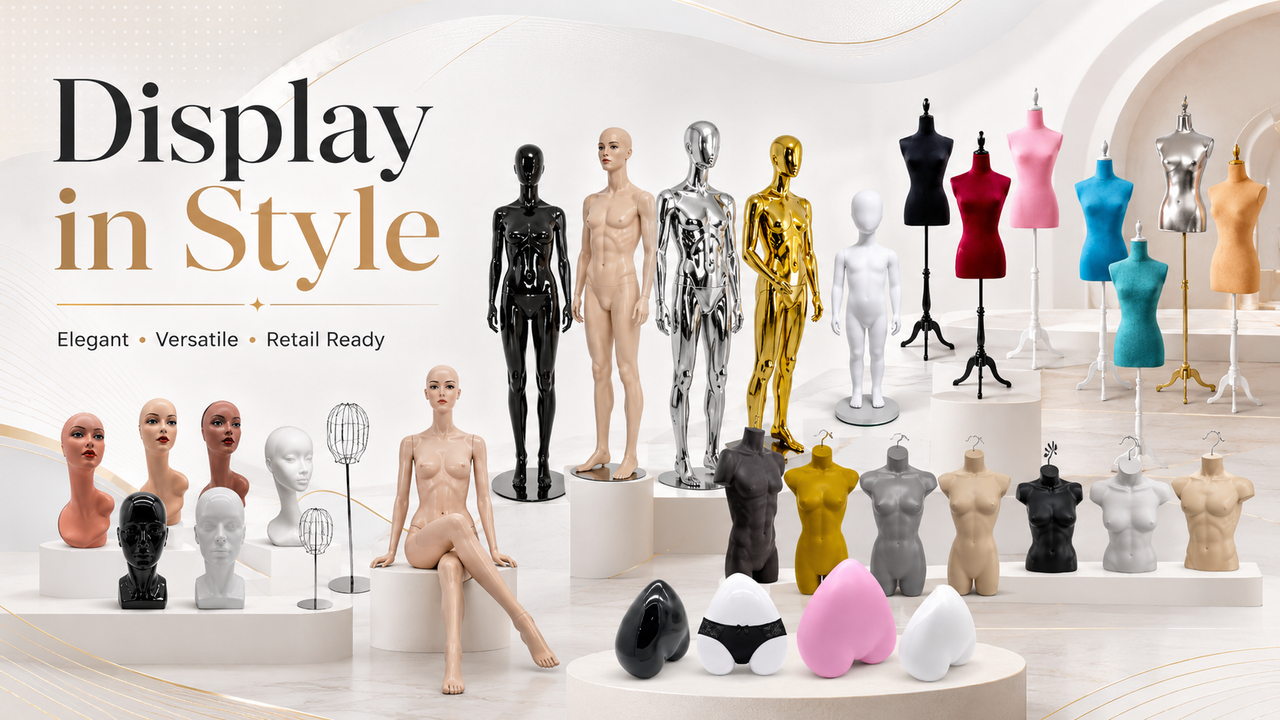
The right mannequin makes clothing easier to understand at a glance. It shows shape, proportion and styling in a way that a folded garment or hanger cannot. For a boutique, department, studio or exhibition stand, the best choice is not simply the most attractive model. It is the mannequin that fits your garments, available space, display routine and brand presentation.
This guide explains the main decisions so you can compare options confidently and avoid buying a model that is difficult to dress, unstable or unsuitable for your products.
Start with the job the mannequin needs to do
Before comparing colour or pose, decide how the mannequin will be used. A window display needs a strong silhouette that can be understood from a distance. A mannequin on the shop floor must leave comfortable space around aisles and nearby rails. A studio may need a pin-friendly dressmaker dummy, while ecommerce photography usually benefits from a consistent, neutral form.
- Window merchandising: prioritise visual impact, a stable base and a pose that works with the viewing angle.
- Shop-floor display: choose a practical footprint and a form that staff can redress efficiently.
- Tailoring or dressmaking: look for a torso suited to fitting, pinning and garment preparation.
- Product photography: favour a simple finish and repeatable posture that keeps attention on the garment.
- Events and pop-ups: consider weight, transport, assembly and storage as carefully as appearance.
Full body mannequin, torso or hanging body form?
Full body mannequins
A full body mannequin gives the most complete styling opportunity. It can present coordinated clothing, footwear and accessories and is especially effective near an entrance or in a window. It needs more floor space and usually takes longer to dress, so check the dimensions and assembly method before ordering.
Torso mannequins and dressmaker dummies
A torso focuses attention on jackets, shirts, dresses and upper-body styling. Models supplied with adjustable-height stands can work well in boutiques, studios and exhibitions because they offer a professional presentation with a smaller footprint. Dressmaker dummies are useful when fitting and construction matter as much as visual display.
Hanging body forms
Hanging forms are compact and economical. They suit wall displays, market stalls, stock presentations and areas where floor space is limited. They do not create the same complete outfit story as a full body model, but they make individual garments easier to view than a standard hanger.
Match the mannequin to the clothing
Check the mannequin measurements against the garments you expect to display most often. A model that is too broad can strain clothing and make dressing difficult. A form that is too small can make garments hang poorly unless they are carefully pinned or adjusted. Consider chest, waist, hip, shoulder and height measurements rather than relying only on a general male, female or child label.
Also think about how frequently the range changes. Removable arms or an easy assembly system can save staff time when displays are updated every week. For trousers, full-length dresses and layered outfits, check that the pose and stand will not interfere with hems or fastenings.
Choose a pose that supports the display
A dramatic pose can create energy in a window, but it may limit the garments that fit naturally. A straight or gently relaxed pose is usually more versatile for frequent outfit changes. If several mannequins will appear together, compare their direction, height and spacing so the group feels intentional without blocking customer movement.
Keep supporting stock close to the styled display. Customers should be able to find the featured garment on a nearby rail or shelf without searching across the store.
Compare materials and finishes
Plastic mannequins are often lightweight and practical for regular movement. Fibreglass can provide a detailed, premium form, but it needs careful handling. Fabric-covered torsos create a softer boutique or studio look and may suit garments that need light pinning. Always use the individual product specification when confirming material, care and suitability.
Finish affects both presentation and maintenance. Matt surfaces reduce reflections and keep attention on clothing. Gloss finishes can create a bold modern look. Neutral white, black or grey works across changing collections, while metallic or coloured models can become part of the brand story. Choose one visual direction and apply it consistently across a display.
Check the base, stand and available space
Measure the full display area, including the base, arms and any outward leg position. Leave enough room for customers, pushchairs and staff carrying stock. A stable base is important in busy areas, while an adjustable stand can help a torso align with nearby rails or window sightlines.
Before purchase, confirm:
- The complete assembled dimensions and base footprint.
- The mannequin measurements and garment compatibility.
- Whether arms, hands, head or torso sections are removable.
- The stand or base material and how it connects.
- The total weight and whether one person can move it safely.
- The storage space required when the mannequin is not in use.
Plan for dressing and day-to-day care
Create enough clear space before changing an outfit and support each removable part while dressing. Avoid forcing sleeves, fastenings or shoes over a form that is too large. Follow the product care instructions and use appropriate gentle cleaning methods for the finish. Regularly check stand connections and base stability, particularly after moving a display.
For a coordinated store, use a small family of mannequin styles rather than unrelated finishes and poses. Consistency helps garments feel like part of one collection and makes future display planning faster.
A quick mannequin buying checklist
- What garments and sizes will be displayed?
- Is the priority impact, fitting, photography or space saving?
- How much floor or wall space is available?
- How often will staff redress or move the mannequin?
- Which material and finish suit the brand and maintenance routine?
- Does the stand provide the required height and stability?
- Can the displayed product be found close to the mannequin?
Find the right display form for your shop
Start with function, measurements and available space, then choose the pose and finish that support your visual identity. This approach produces a display that looks professional and remains practical for everyday retail work.
Browse Shoplines mannequins, torsos and body forms or contact Shoplines Supplies for help narrowing down the most suitable option.