
How to Choose Shopping Baskets and Trolleys for Your Store
Posted by Shoplines Supplies on 9th Aug 2026

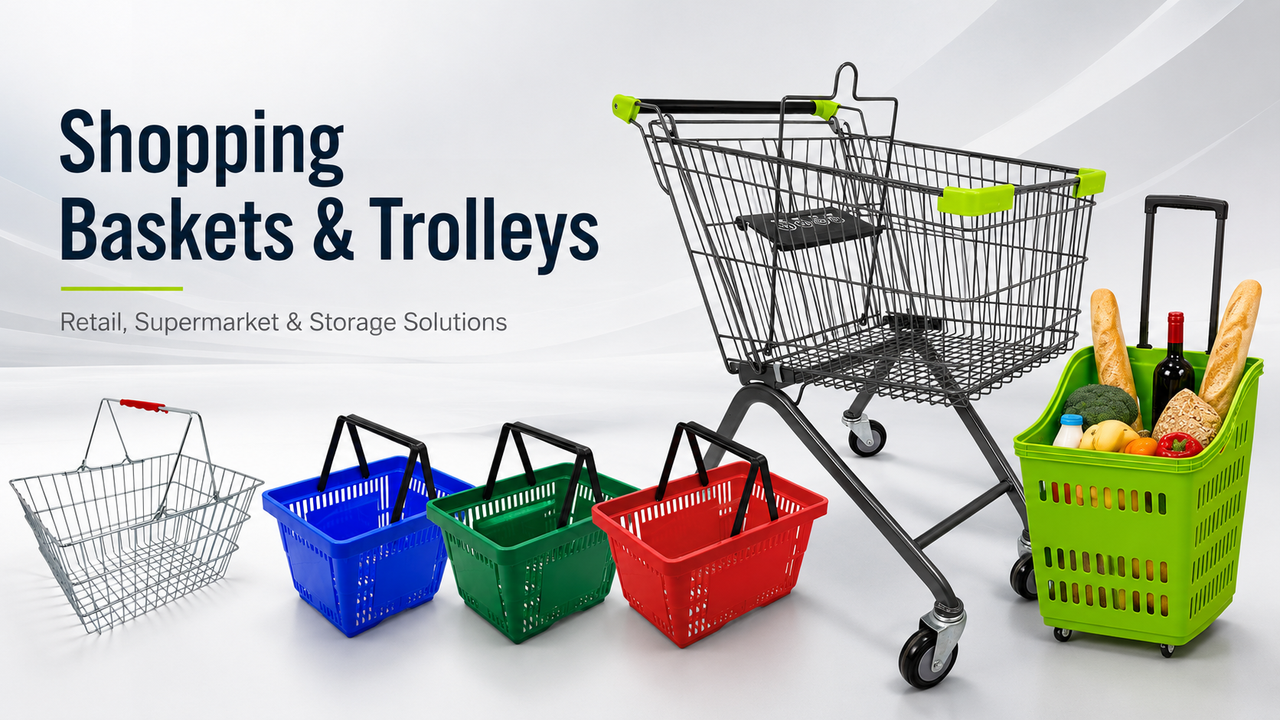
Shopping baskets and trolleys affect how comfortably customers move, how much they can carry and how tidy the entrance and checkout areas remain. A convenience store, supermarket, pharmacy and garden centre will not need the same capacity or handling features.
The right choice starts with the typical shopping trip in your store. Consider the number, size and weight of items, aisle width, customer profile and where the equipment will be stored.
Basket, wheeled basket or trolley?
Hand baskets
Hand baskets suit short visits and smaller purchases. They are easy to position at entrances and around the shop, and nested stacks take up relatively little space. Check handle comfort, basket weight and the shape of the base, especially when customers regularly carry bottles or boxed products.
Wheeled baskets
A wheeled basket gives customers more carrying capacity without the footprint of a full trolley. It can work well in medium-sized stores, beauty retail, discount shops and environments where customers buy several bulky items. Compare handle height, wheel layout and how neatly the baskets nest.
Shopping trolleys
Trolleys suit larger shops and heavier or higher-volume trips. Capacity, turning circle and aisle clearance become important. Child-seat options may be useful for family shopping, but features must match the individual product specification and store needs.
Choose capacity around the real basket
Capacity should reflect the typical purchase, not the largest possible visit. If the basket is too small, customers may need a second one. If it is too large, it can feel awkward in narrow aisles and creates a larger storage stack.
Review your common product mix. Lightweight clothing, cosmetics and stationery need different handling from bottles, tins or larger household goods. For mixed purchases, consider offering two formats, such as hand baskets for quick trips and wheeled baskets or trolleys for larger shops.
Measure aisles, entrances and checkout space
Measure the narrowest routes customers will use, including promotional displays and queue barriers. A trolley that fits the main aisle may still struggle at the entrance or checkout. Allow room for customers to turn, pass and stop without blocking others.
Also measure the nesting area. Equipment should have a clear, obvious home near the entrance and should not obstruct doors, fire routes or service points. The number of baskets or trolleys required depends on peak demand and how quickly staff return them.
Handles and wheels matter
For hand baskets, check that the handles sit comfortably together and do not pinch when the basket is loaded. For wheeled models, a telescopic or extended pull handle should be easy to reach and store. Trolley handles should provide steady control without forcing an uncomfortable grip.
Wheel design affects turning and tracking. Four-wheel baskets can move easily in several directions, while trolley castors must suit the expected load and floor. Keep wheels clean and inspect them regularly so movement stays predictable.
Nesting and storage
Efficient nesting reduces the space required at the entrance and checkout. Confirm the footprint and total height of a realistic stack, not just one basket. Avoid over-stacking if it makes the top item difficult to reach safely.
Create a simple routine for returning equipment to its starting point. Customers are more likely to use baskets when they are visible, clean and available before they begin browsing.
Durability, cleaning and replacement
Retail baskets and trolleys are handled throughout the day, so inspect edges, handles, frames and wheels. Choose materials that suit your cleaning routine and follow the manufacturer's care guidance. Replace damaged components or remove unsafe equipment from use promptly.
Colour can support navigation and branding, but consistency is more valuable than unnecessary variety. A clear, coordinated set looks professional and makes it easier for staff to identify misplaced items.
Decision guide by store type
- Convenience store: compact hand baskets, with a small number of larger options if space allows.
- Fashion or beauty: comfortable hand or wheeled baskets that protect boxed and soft goods.
- Supermarket: a planned mix of baskets and trolleys for different trip sizes.
- Garden centre or warehouse retail: prioritise capacity, stability and routes around larger products.
- Pop-up or event: consider nesting, transport and temporary storage.
Buying checklist
- Typical item count, dimensions and weight reviewed.
- Narrowest aisle and checkout route measured.
- Capacity chosen for normal shopping behaviour.
- Handles and wheels suitable for the customer group.
- Nesting footprint and storage position confirmed.
- Cleaning and inspection routine planned.
- Peak quantity estimated with a reasonable reserve.
Make shopping easier from the entrance
A well-matched basket or trolley removes friction from the visit. Select the format around real customer behaviour, then verify capacity, movement, storage and maintenance.
Browse Shoplines shopping baskets and trolleys, including 100 litre supermarket trolleys and 22 litre wire shopping baskets.