
How to Choose Retail Carrier Bags for Your Business
Posted by Shoplines Supplies on 9th Aug 2026

A carrier bag is part of the final customer interaction, but it also has to protect the purchase, fit behind the counter and work efficiently during busy periods. Choosing by colour alone can result in bags that are too small, difficult to pack or unsuitable for the weight and shape of the product.
Use this guide to compare size, material, handles, presentation and storage before ordering retail bags in quantity.
Start with the products you pack most often
List the common purchase combinations at the checkout. Record the length, width, depth and approximate weight of representative items. Clothing, gift boxes, bottles, books and jewellery all place different demands on a bag.
Allow enough room for staff to pack without forcing products through the opening. At the same time, avoid using a large bag for a small purchase when a compact size would be easier to carry and store.
Build a useful size range
Many shops benefit from two or three core sizes rather than a single universal bag. A small format can handle accessories and compact gifts. A medium option covers the normal purchase. A larger bag supports bulky or multi-item transactions.
Test each size with real products before a bulk order. Check the base and side gussets, not only the flat width. A gusset helps the bag open around boxes and folded garments.
Paper carrier bags
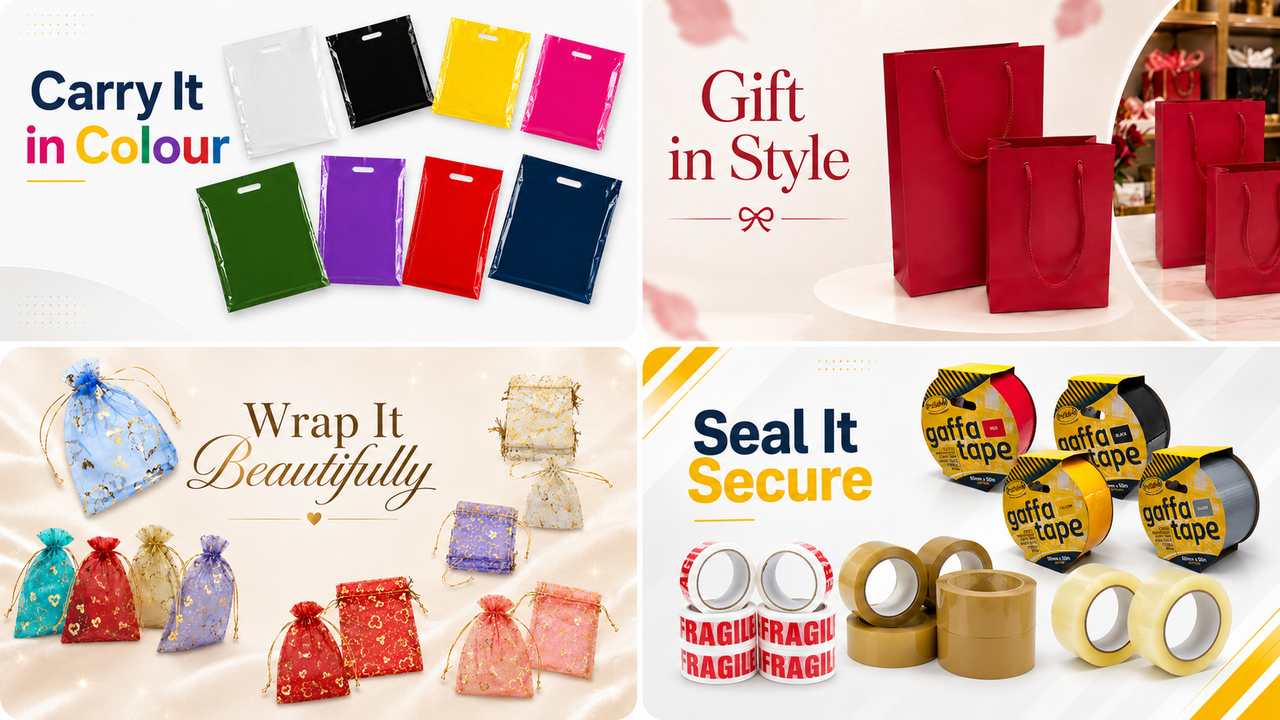
Paper bags create a crisp presentation and are commonly used for gifts, fashion and boutique retail. Compare paper weight, base construction and handle style against the intended contents. Twisted paper, flat paper and cord handles provide different appearances and carrying experiences.
Paper should be stored in a dry area and protected from crushing. Confirm the product specification for weight and intended use rather than assuming every paper bag carries the same load.
Plastic carrier bags
Plastic bags can be lightweight, compact to store and useful for many everyday retail applications. Vest, patch-handle and loop-handle formats serve different packing needs. Check dimensions, thickness and handle construction for the exact product.
Requirements and charges relating to carrier bags can change. If legal or environmental information affects your business, use current official UK guidance for your location and operating model rather than relying on an old product description or article.
Gift, organza and specialist bags
Organza and small gift bags suit jewellery, favours and accessories where presentation is part of the purchase. Mailing and protective packaging serve a different purpose and should be selected around transit risks, sealing and labelling requirements.
Do not use a decorative bag as a substitute for protective packaging when the item needs cushioning, moisture resistance or secure closure.
Choose handles around comfort and speed
Handles should suit the expected load and be quick for staff to present. Die-cut handles keep the profile compact. Loop, cord and paper handles change the appearance and feel. Test the grip with a realistic packed bag and check that handles do not press uncomfortably into the hand.
Plan branding carefully
A consistent bag colour, logo and message can extend the store identity beyond the checkout. Keep the design legible and avoid filling every surface. Before arranging printed bags, confirm artwork requirements, print area, colours, lead time and minimum quantities.
Plain stock bags can be a practical starting point for a new business or changing campaign. Branded stickers, tissue or swing tags may add presentation while keeping the core bag flexible.
Storage and checkout workflow
Measure the storage area behind the counter. Bags should remain flat, clean and easy to reach without blocking staff movement. Store sizes in a fixed order and train staff to select the smallest suitable option for the purchase.
Monitor usage by size. A simple stock count prevents one popular format from running out while less useful sizes accumulate.
Buying checklist
- Typical product dimensions and combinations measured.
- Small, medium and large requirements tested.
- Material and handle matched to expected contents.
- Gusset, base and opening checked with real products.
- Counter storage space measured.
- Branding quantities, artwork and lead times confirmed.
- Current official guidance checked where regulation is relevant.
- Reorder levels planned for each size.
Choose packaging that works at the checkout
The best retail bag protects the purchase, feels comfortable to carry and fits the daily packing routine. Test products in the bag, confirm the specification and keep the size range focused.
Browse Shoplines bags and packaging, including plastic carrier bags, paper gift bags, tapes and organza bags. For branded options, see logo printing on retail bags.